
Appetite Hormone Dysregulation Speed
Understanding ghrelin and leptin response variations across pace of body mass change.
Introduction
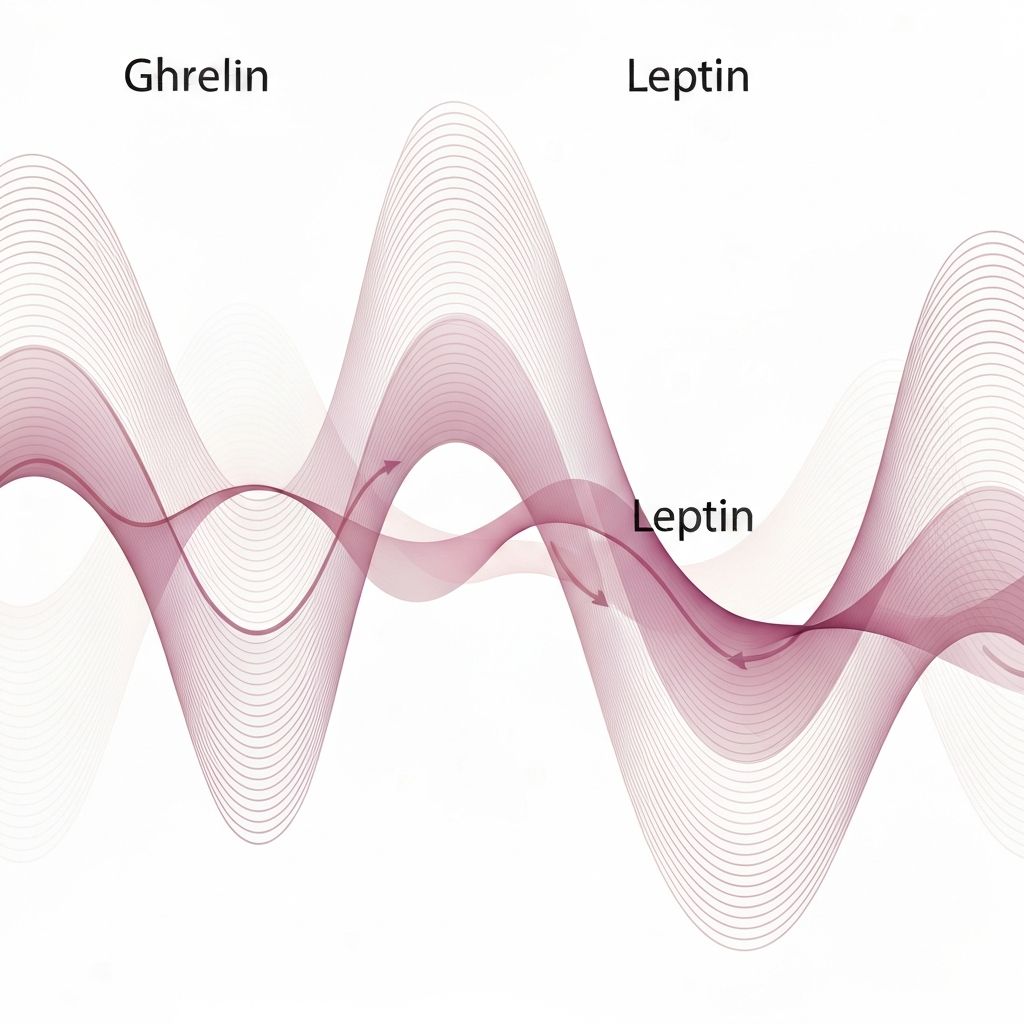
Appetite hormones regulate hunger and satiety signals in response to energy availability. Two primary hormones mediate these signals: ghrelin (often called the "hunger hormone") and leptin (associated with satiety signaling). During energy restriction, both hormones respond to deficit magnitude and duration, with differing timelines and magnitudes between rapid and gradual approaches.
Ghrelin Responses
Function: Ghrelin is primarily produced by the stomach and signals hunger to the central nervous system. Higher ghrelin levels increase appetite and food-seeking behavior.
Rapid Restriction Response:
- Ghrelin begins rising within 3-5 days of aggressive deficit
- Peak elevations occur at 4-6 weeks, with levels 80-150% above baseline in some studies
- Subjective hunger increases notably within first 2 weeks
- Elevated ghrelin may persist 4-8 weeks after restriction ends
Gradual Restriction Response:
- Ghrelin rises more gradually over 2-3 weeks
- Peak elevations reach 40-70% above baseline over similar timeframes
- Subjective hunger increases more gradually
- Elevated ghrelin returns closer to baseline sooner after restriction ends (weeks 2-4 post-restriction)
Leptin Responses
Function: Leptin is primarily produced by adipose tissue and signals satiety. Higher leptin levels support satiety signaling; lower levels reduce satiety perception.
Rapid Restriction Response:
- Leptin declines sharply, dropping 40-60% in first 1-2 weeks
- Continued decline occurs throughout restriction period
- Final suppression may reach 70-90% below baseline
- Reduced satiety signaling becomes pronounced within first week
- Recovery post-restriction occurs gradually over weeks to months
Gradual Restriction Response:
- Leptin declines more gradually, dropping 20-35% over first 2-3 weeks
- More gradual continued decline throughout restriction
- Final suppression typically reaches 50-70% below baseline
- Satiety signaling remains more active throughout restriction
- Faster recovery post-restriction (weeks 1-3)
Comparative Hormone Magnitude
Research directly comparing rapid and gradual approaches shows:
- Ghrelin Elevation: 2-3 times higher in rapid vs gradual at equivalent timepoints
- Leptin Suppression: 30-40% greater leptin reduction in rapid approaches
- Combined Effect: Hunger-satiety signaling imbalance is substantially greater in rapid restriction
Subjective Hunger Experience
Hormonal changes correlate with perceived hunger:
- Rapid Restriction: Subjects report intense hunger within 1-2 weeks, often peaking at 3-4 weeks
- Gradual Restriction: Subjects report mild to moderate hunger developing gradually, often less intense throughout
- Adaptation: Some habituation to hunger occurs in both groups, but baseline remains higher in rapid approaches
Recovery Timeline Post-Restriction
Appetite hormones recover at different rates following restriction cessation:
- Rapid Restriction Group: Ghrelin normalization occurs over 4-12 weeks; leptin recovery extends 2-6 months or longer depending on body composition restoration
- Gradual Restriction Group: Faster hormone normalization (ghrelin: 2-4 weeks; leptin: 4-8 weeks)
- Practical Consequence: Post-restriction hunger environment differs substantially between approaches for weeks to months
Other Appetite-Related Hormones
Beyond ghrelin and leptin, other hormonal signals respond to restriction rate:
- Peptide YY: Satiety signal typically shows greater suppression in rapid restriction
- GLP-1: Satiety hormone shows greater decline in rapid approaches
- Cortisol: Stress hormone may elevate more substantially in rapid restriction
Mechanisms of Differential Hormone Response
Several mechanisms explain why appetite hormones respond more dramatically to rapid restriction:
- Deficit Magnitude: Larger deficit triggers stronger hormonal response
- Rapid Depletion: Quick glycogen and energy depletion signals trigger faster hormone adjustment
- Metabolic Stress: Greater metabolic stress in rapid approaches amplifies compensatory hormone signaling
- Neurological Adaptation: Central nervous system adjusts hunger-satiety set point in response to persistent deficit magnitude
Individual Variation and Genetics
Substantial individual differences exist in appetite hormone responsiveness:
- Some individuals show minimal ghrelin elevation despite aggressive restriction
- Leptin sensitivity varies—some remain satiated despite low leptin; others become quite hungry
- Genetic factors influence baseline hormone levels and responsiveness
- Prior dieting history may affect hormone response patterns
Practical Implications
Appetite hormone differences between approaches have practical consequences:
- Hunger management differs substantially between rapid and gradual approaches
- Post-restriction hunger environment may be quite different, affecting regain risk and sustainability
- Individual tolerance for hunger varies; some may prefer the post-restriction environment of rapid approaches while others prefer gradual approaches
Conclusion
Appetite hormones respond more dramatically and rapidly to aggressive restriction compared to gradual approaches. Ghrelin elevation is 2-3 times greater in rapid groups; leptin suppression is 30-40% greater. These differences create more intense hunger signals with rapid restriction and prolong the post-restriction appetite dysregulation period. Both approaches trigger appetite hormone responses; the differences lie in magnitude and timeline rather than presence or absence of response.